



• Products
  • Insights
  • Practice Management
  • Resources
  • About Us
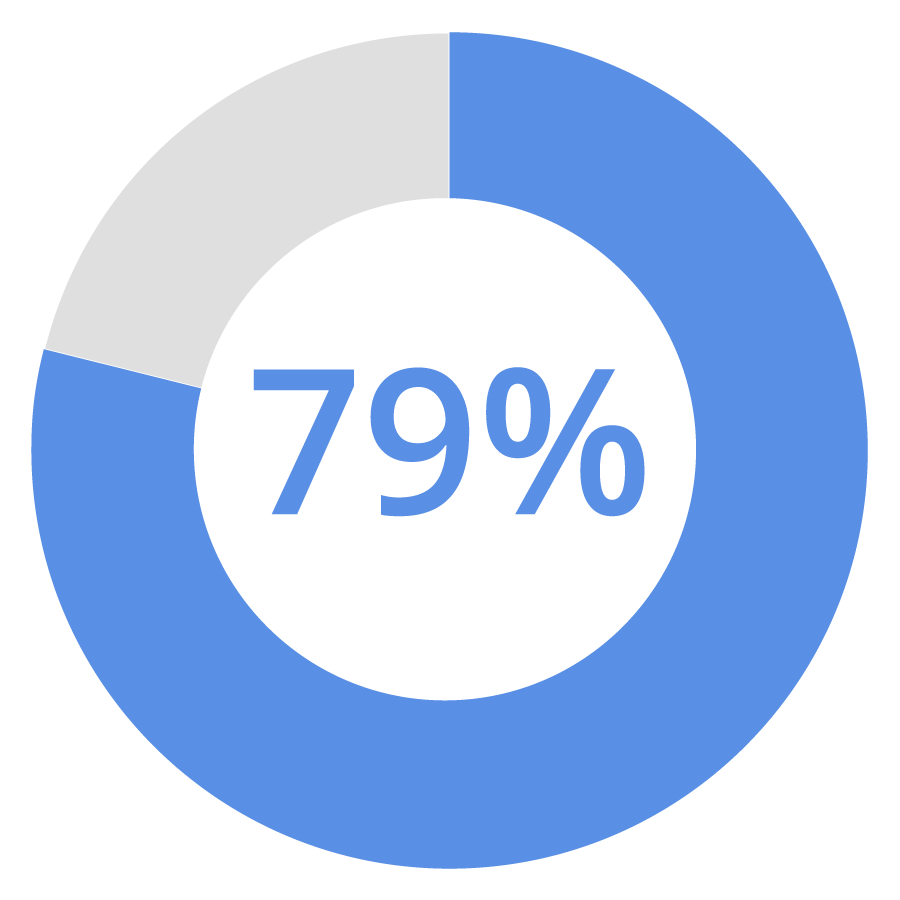
75% of clients would change financial  professionals if theirs couldn’t help them maximize their Social Security benefits

80% of clients would change financial professionals if theirs couldn’t help them maximize their Social Security benefits1

Many financial professionals say they’re reluctant to initiate Social Security conversations. They think the topic is too complicated and don’t want to risk being asked a question they can’t answer. Unfortunately, those financial professionals could not only be missing chances to help their clients but also asset-gathering opportunities. Here’s the good news: Providing valuable guidance to clients doesn’t require you to be a Social Security expert. The following three-question process can help increase clients’ confidence in their retirement-income plan and help you consolidate assets that reside outside of your firm.
 
 
First, “What Are You Expecting From Social Security?”
 
One of the most important things you can do for your clients is show them how to find out the amount of Social Security retirement income they’re entitled to receive. Why? Among those recently surveyed, more 36% aren’t sure how much their monthly benefit will be.1 Worse yet, there’s also a tendency for workers to overestimate their monthly Social Security benefits. Thirty-six percent of retirees said the Social Security income they’re receiving is substantially lower than what they expected.2 
 
To find out their projected benefit, clients can view their Social Security statement online at ssa.gov. They can see their benefit estimates based on various ages at which they might file—before full retirement age (FRA), filing at FRA, and delayed filing—and the difference can be substantial. To access their statement, clients need to have a “my Social Security” account. If they don’t have an account, they can easily create one. You may have savvy clients who’ve done their homework and know what their monthly benefit will be. Either way, it can’t hurt to double-check. While they’re at it, urge clients to confirm the accuracy of their personal information, including their earnings history. 
 
Once you have your client’s projected Social Security income, move on to the next question.



75% of clients would change financial  professionals if theirs couldn’t help them maximize their Social Security benefits

80% of clients would change financial professionals if theirs couldn’t help them maximize their Social Security benefits1

More than 40% aren't sure how much their monthly Social Security benefit will be

36%

are unsure how much their monthly Social Security benefit will be2

of retirees said the Social Security income they are receiving is substantially lower than what they expected.

36%

of retirees are receiving a lower-than-expected Social Security benefit2


Second, “How Much Monthly Income Will You Need in Retirement?”

Currently the average retirement benefit is

$1,907

monthly or

$22,884

annually*

*Frequently Asked Questions, January 2024, ssa.gov

 
You’ve probably touched on the topic before, but have your clients really thought closely about how much monthly income they’ll need in retirement? Even if you’ve developed a retirement income plan, this may be a good time to re-evaluate it. As you know, it’s often an ongoing conversation because personal and economic circumstances can change. 


If Clients Don’t Have Definite Answers to These Questions, That’s Okay
 
For discussion purposes, clients can assume they’ll need 80 percent of their current income in retirement as a guideline.3 Once that figure is established, compare it to the amount of Social Security they’ll likely receive. Chances are, Social Security alone won’t cover their income needs. Review your client’s portfolio to determine whether the monthly income they’ll need can be covered by drawing income from the assets you manage. If there’s still a shortfall between their estimated expenses and estimated Social Security and investment income, move on to the third question.
 
 
Third, “If There’s a Shortfall, Where Will the Income Come From?”
 
To make up the difference, clients may have the option to tap other available income sources. If so, you need to find out what those options are—and where. This question is intended not only to help make up for the income shortfall, but also uncover clients’ accounts that you don’t manage and bring everything into view. These accounts could include:
 
  • Traditional or Roth IRAs, 401(k)s, 403(b)s, or other tax-deferred retirement savings accounts
  • Non-qualified mutual funds or ETFs
  • Pension plans
  • Other savings and investments
 
By being aware of all the potential sources, you can build a comprehensive retirement income plan that’s more likely to cover your client’s retirement-income needs and goals and in a more efficient manner. 
 
If it’s in your client’s best interest, talk to them about the potential benefits of consolidation. Having their entire portfolio, or at least most of it, in one place enables you and your client to make more informed investment decisions. Consolidation can also simplify account tracking by cutting down on the number of emails and 1099 forms clients receive—and possibly reduce overall fees.
 

What if There Is No Gap?
 
If there’s no gap, that’s great! Knowing they’re already positioned to receive enough retirement income to sufficiently cover their needs and goals can put your clients at ease. Even so, the asset-gathering opportunity isn’t lost. For example, the average Baby Boomer has held an average of 12 jobs, making it easy to lose track of past retirement accounts.4 More than a quarter of all the money American workers have in retirement accounts is tied up in old plans, averaging $56,616.4 It’s still reasonable to ask your clients if they own accounts elsewhere and evaluate whether account consolidation would be advantageous for them. 
 
 
Three Things to Remember When Talking Social Security with Your Clients
 
First, you don’t need to be a Social Security expert to provide valuable guidance. Few workers know how much Social Security income they’re entitled to receive. Second, review clients’ estimated retirement expenses and compare them to the amount of income to be drawn from the assets you manage. Third, if there’s a shortfall, help them figure out where the additional income will come from. If clients reveal that they own accounts elsewhere, you can discuss whether consolidation would be beneficial. 


Currently the average retirement benefit is

$1,907

monthly or

$22,884

annually*

*Frequently Asked Questions, January 2024, ssa.gov


Author Headshot
Managing Director, Applied Insights

Mike educates financial professionals on a variety of topics, with a focus on research from the MIT AgeLab. Mike translates the knowledge of our various partnering experts—such as psychologists, physiologists, and practice-management specialists—into practical, actionable ideas for financial professionals and their clients.

140: How a Jockey’s Financial Journey Led to Peace and Prosperity

February 20, 2025 – (30:43)

Billy Peterson, former jockey and current financial advisor, discusses his three pillars to a successful life—wealth, health, and happiness.

Billy Peterson is not affiliated with Hartford Funds

All information provided is for informational and educational purposes only and is not intended to provide investment, tax, accounting or legal advice. As with all matters of an investment, tax, or legal nature, you and your clients should consult with a qualified tax or legal professional regarding your or your client’s specific legal or tax situation, as applicable.

The preceding is not intended to be a recommendation or advice.

This information does not take into account the specific investment objectives, tax and financial condition of any specific person. This information has been prepared from sources believed reliable but the accuracy and completeness of the information cannot be guaranteed. This material and/or its contents are current at the time of writing and are subject to change without notice. This material may not be copied, photocopied or duplicated in any form or distributed in whole or in part, for any purpose, without the express written consent of Hartford Funds. 

¹ The Nationwide Retirement Institute® 2024 Social Security Survey, nationwidefinancial.com, 7/24.

2 Nationwide Peak Retirement Survey Insights Report, 12/23.

3 How Much Do I Need to Retire Comfortably? fool.com, 9/24.

4 The True Cost of Forgotten 401(k) Accounts, hicapitalize.com, 6/23.

The MIT AgeLab is not an affiliate or Subsidiary of Hartford Funds. 

3931298

The material on this site is for informational and educational purposes only. The material should not be considered tax or legal advice and is not to be relied on as a forecast. The material is also not a recommendation or advice regarding any particular security, strategy or product. Hartford Funds does not represent that any products or strategies discussed are appropriate for any particular investor so investors should seek their own professional advice before investing. Hartford Funds does not serve as a fiduciary. Content is current as of the publication date or date indicated, and may be superseded by subsequent market and economic conditions.

Investing involves risk, including the possible loss of principal. Investors should carefully consider a fund's investment objectives, risks, charges and expenses. This and other important information is contained in the mutual fund, or ETF summary prospectus and/or prospectus, which can be obtained from a financial professional and should be read carefully before investing.

Mutual funds are distributed by Hartford Funds Distributors, LLC (HFD), Member FINRA|SIPC. ETFs are distributed by ALPS Distributors, Inc. (ALPS). Advisory services may be provided by Hartford Funds Management Company, LLC (HFMC) or its wholly owned subsidiary, Lattice Strategies LLC (Lattice). Certain funds are sub-advised by Wellington Management Company LLP and/or Schroder Investment Management North America Inc (SIMNA). Schroder Investment Management North America Ltd. (SIMNA Ltd) serves as a secondary sub-adviser to certain funds. HFMC, Lattice, Wellington Management, SIMNA, and SIMNA Ltd. are all SEC registered investment advisers. The funds and other products referred to on this Site may be offered and sold only to persons in the United States and its territories.

Hartford Funds refers to HFD, Lattice, and HFMC, which are currently not affiliated with any sub-adviser or ALPS.

On June 3, 2026, The Hartford Insurance Group, Inc. (“The Hartford”) and Wellington announced that they had reached a definitive agreement under which Wellington Investment Advisors Holdings, LLP, Wellington’s corporate parent, will acquire Hartford Funds. Upon closing Hartford Funds will be integrated into Wellington’s U.S. Wealth business. The deal is expected to close in the first quarter of 2027, subject to regulatory and fund approvals. Upon closing, Hartford Funds would become an affiliate of Wellington. For more information, click here.

© Copyright 2026 Hartford Funds Management Group, Inc. All Rights Reserved. Not FDIC Insured | No Bank Guarantee | May Lose Value