


• Products
  • Insights
  • Practice Management
  • Resources
  • About Us

After years of unusually low interest rates, the investment landscape has changed. While uncertainty remains, this environment may create renewed opportunities for investors—particularly in high-quality fixed income—while reinforcing the importance of diversification1 and long-term discipline. 
 

A Changing Market Backdrop
For years, investors faced a world defined by low inflation, low interest rates, and rising stock prices. That environment began to shift in 2022 as inflation surged and central banks raised rates aggressively. Since then, inflation has moderated, but it hasn’t fully returned to pre-pandemic norms.

Today’s market reflects a balance of competing forces:

  • Inflation is lower than its peak, but still above long-term targets.
  • Economic growth has remained resilient, supported by consumer spending and fiscal policy.
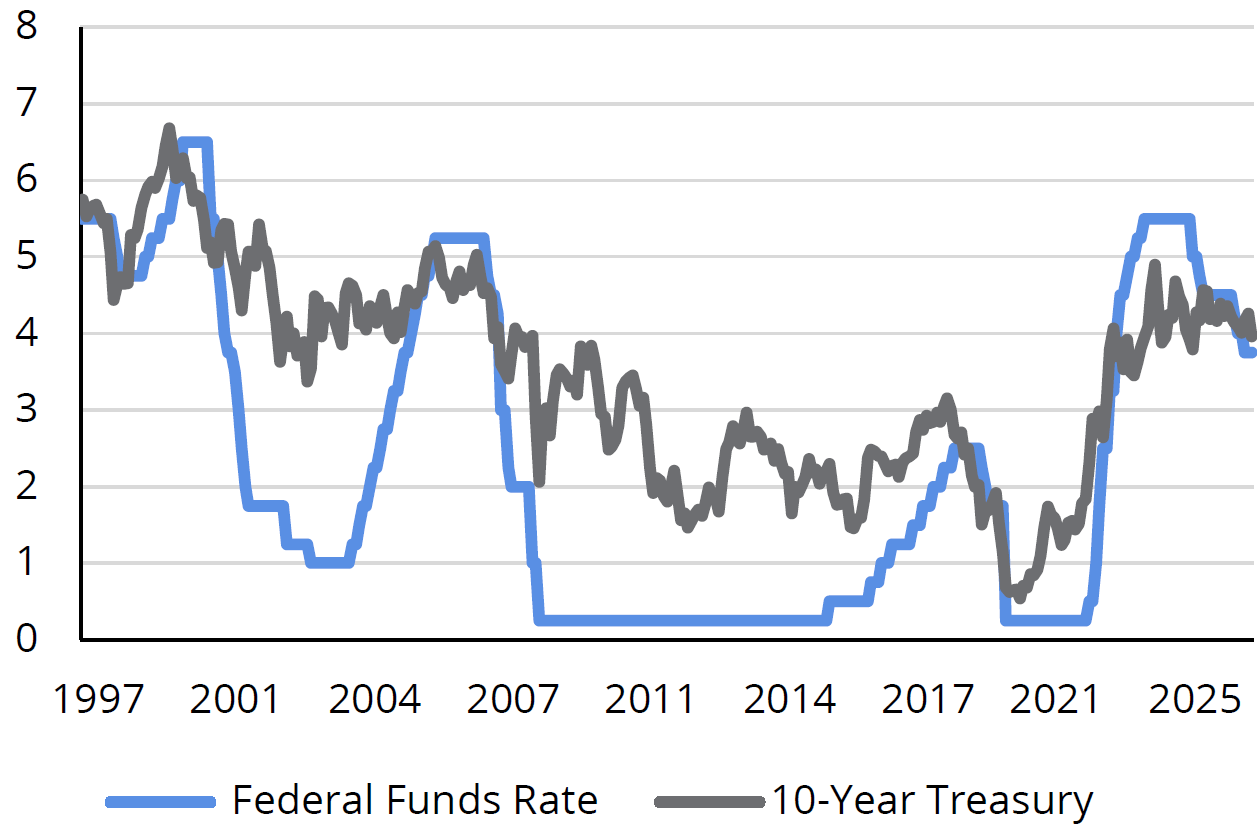
  • Interest rates remain higher, changing the relative appeal of stocks, bonds, and cash.

Rather than signaling a return to the old regime, these conditions suggest a more complex environment—one in which both risks and opportunities exist across asset classes.


Why Fixed Income Looks Different Now

For years, bonds offered limited income and did little to hedge against inflation. But bond investments now look more attractive once again.

Several factors are driving renewed interest in fixed income: Higher yields mean bonds may pay investors more than they did for much of the past decade, restoring income potential to fixed-income allocations.

At the same time, bonds may once again help offset stock-market volatility, particularly if economic growth slows. And with the gap between stock valuations and bond yields having narrowed, the trade-offs between risk and return across asset classes are now more balanced than they‘ve been in years.

While bonds still have their risks, today’s starting yields provide a cushion that was largely absent in the past (FIGURE 1).
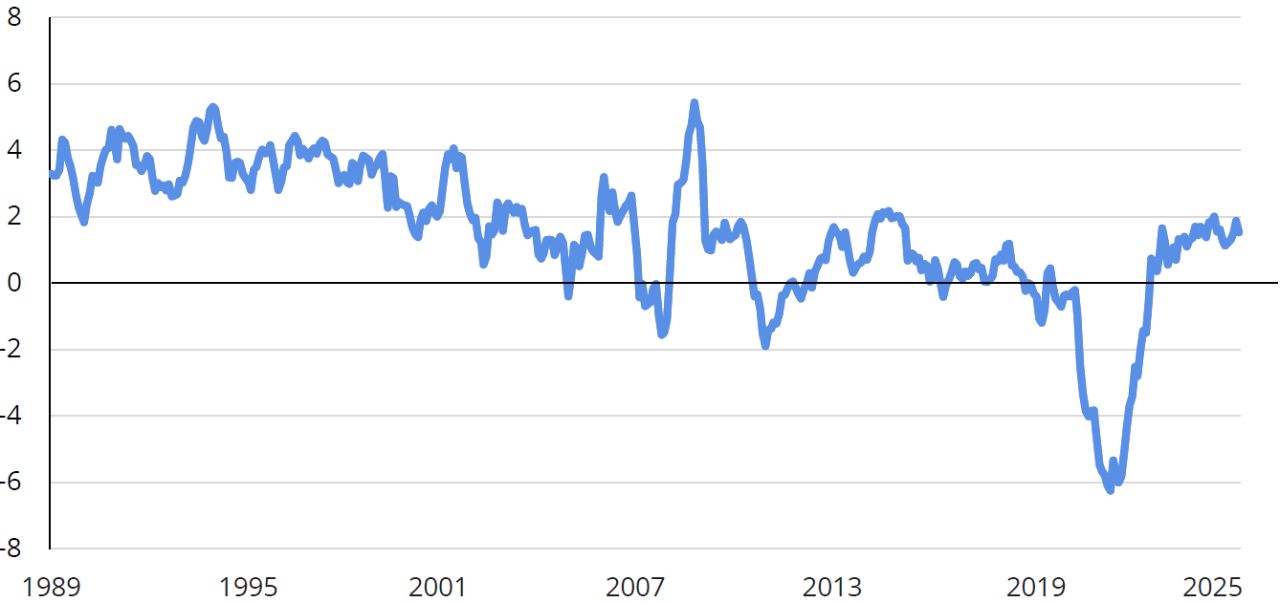
FIGURE 1

Fixed Income May Once Again Provide Meaningful Income
10-Year Treasury Real Yield (%)

Chart data: 12/31/89–11/30/25. Past performance does not guarantee future results. Real yield is the return on an investment after adjusting for inflation. Data Source: Bloomberg.


Stocks Are Still Important—But Valuations Matter

Equities continue to play a critical role in long-term growth. However, stock valuations are elevated compared to historical averages (FIGURE 2). Future equity returns may become more dependent on continued earnings strength—which can be difficult to sustain later in the economic cycle.

This doesn’t mean stocks are poised for an immediate decline. Rather, it suggests that future returns may be more moderate than in recent years, and that volatility could increase as markets react to economic and policy shifts. And since US investors have dramatically increased their holdings in equities while holding the lowest allocation to fixed income in a generation, a shift in market leadership could introduce undue risk. 

All of the above make diversification more important now than ever, especially as fixed income becomes more attractive. 
 

FIGURE 2

Fixed Income Is Relatively More Attractive Than Equities and Cash 

S&P 500 Index Earnings Yield2 vs. 10-Year Treasury Yield (%)    

10-Year Treasury vs. Federal Funds Rate3 (%)   

Left: Chart data: 12/31/89–12/31/25. Earnings yield measures a company’s trailing 12-month earnings per share relative to its current share price. Data Source: Bloomberg. Right: Chart data: 12/31/97–11/30/25. The federal funds rate is the rate at which banks borrow from each other overnight and is used as a proxy for cash yields. Data Source: Bloomberg. 

In this environment, a balanced, long-term approach remains essential for navigating uncertainty.


Cash Isn’t Risk Free Either

Higher short-term interest rates have made investors more comfortable with holding cash. However, cash carries its own risks: If rates decline, investors face risks of reinvesting at less attractive entry points. Holding cash can also put investors at a disadvantage because it often can’t keep up with inflation, reducing purchasing power. And other investments may outpace cash, presenting opportunity costs for investors. 

As fixed-income yields become more competitive again, investing modestly beyond cash into high-quality bonds may offer higher income while still maintaining a conservative risk profile.


Productivity, Technology, and Inflation

One of the most important questions facing the economy is how technological advances, including AI, will affect growth and inflation over the long term.

Higher productivity can help companies produce more without charging consumers more, which can help reduce inflationary pressures over time. 

At the same time, technological transitions can create short-term disruptions, including uneven impacts across industries and labor markets. These crosscurrents help explain why inflation may remain volatile even as longer-term pressures ease.


Key Takeaways

The investment landscape has entered a new regime, marked by higher interest rates and disinflationary trends, which have helped restore the appeal of fixed income. After years of strong equity returns, many portfolios are heavily tilted toward stocks and underallocated to bonds, leaving less margin for error if equity leadership narrows or volatility remains elevated. In this environment, a balanced, long-term approach remains essential for navigating uncertainty and positioning portfolios for a range of possible scenarios.


To learn more about the role of diversification in your portfolio, please talk to your financial professional. 


1 Diversification does not ensure a profit or protect against a loss in a declining market.

S&P 500 Index is a market capitalization-weighted price index composed of 500 widely held common stocks.

Important Risks: Investing involves risk, including the possible loss of principal. • Fixed-income security risks include credit, liquidity, call, duration, and interest-rate risk. As interest rates rise, bond prices generally fall. • US Treasury securities are backed by the full faith and credit of the US government as to the timely payment of principal and interest. 

The views expressed herein are those of Wellington Management, are for informational purposes only, and are subject to change based on prevailing market, economic, and other conditions. The views expressed may not reflect the opinions of Hartford Funds or any other sub-adviser to our funds. They should not be construed as research or investment advice nor should they be considered an offer or solicitation to buy or sell any security. This information is current at the time of writing and may not be reproduced or distributed in whole or in part, for any purpose, without the express written consent of Wellington Management or Hartford Funds.


WP892 5319539
Insight from sub-adviser Wellington Management
Author Headshot
Fixed-Income Portfolio Manager
Author Headshot
Macro Strategist