Pre-Sales Support
Mutual Funds and ETFs - 800-456-7526
Monday-Thursday: 8:00 a.m. – 6:00 p.m. ET
Friday: 8:00 a.m. – 5:00 p.m. ET
Post-Sales and Website Support
888-843-7824
Monday-Friday: 9:00 a.m. - 6:00 p.m. ET
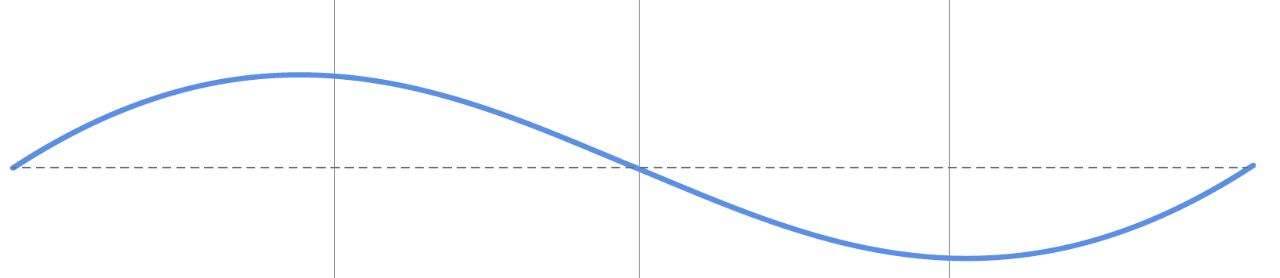
Economic Regime
Expansion
The economy is growing strongly, and momentum is building
Slowdown
Growth remains positive, but the pace of economic activity begins to cool
Contraction
Economic activity weakens as conditions deteriorate
Recovery
The economy begins to rebound, even if conditions still feel weak
Market Leadership
Asset classes with expected relative outperformance during each part of the cycle
Equities
| Equities
| Rate Sensitive
| Equities
|
|---|---|---|---|
Credit
| Rate Sensitive
| Credit
| Credit
|
Rate Sensitive
| Credit
| Equities
| Rate Sensitive
|
| Expansion |
|---|
| Growth is accelerating, which has historically favored cyclical assets and risk‑taking |
| Examples: |
| 2003–2007: An expansion driven by housing, credit growth, and global trade |
| 2010–2018: A prolonged expansion after the Global Financial Crisis (GFC), supported by accommodative monetary policy and steady job gains |
| Slowdown |
|---|
| Growth begins to slow, leading many investors to shift to more defensive areas of the market |
| Examples: |
| 2006–2007: Economic growth slowed but remained positive as housing and credit markets weakened |
| 2018–2019: Growth slowed amid tighter financial conditions and trade uncertainty, but the economy avoided recession |
| Contraction |
|---|
| Growth decelerates below trend, often coinciding with tighter financial conditions |
| Examples: |
| 2008–2009: During the GFC, credit markets collapsed and unemployment skyrocketed |
| Early 2020: The brief but severe COVID‑19 recession caused by widespread economic shutdowns |
| Recovery |
|---|
| Growth remains below trend, but improving fundamentals signal a turning point |
| Examples: |
| 2009–2010: The initial recovery after the GFC, supported by stimulus and ultra‑easy monetary policy |
| Mid‑2020–2021: Rapid recovery after the pandemic recession as fiscal stimulus and pent‑up demand boosted growth |
For illustrative purposes only. Data Sources: Morningstar and Hartford Funds, 2/26.
Your financial professional can help you interpret today’s economic environment and align your portfolio with your long-term goals.
1 Treasury Inflation-Protected Securities (TIPS) are Treasury bonds that are adjusted to eliminate the effects of inflation on interest and principal payments, as measured by the Consumer Price Index (CPI).
Duration is a measure of the sensitivity of an investment’s price to nominal interest-rate movement.
Important Risks: Investing involves risk, including the possible loss of principal. • Foreign investments may be more volatile and less liquid than U.S. investments and are subject to the risk of currency fluctuations and adverse political, economic and regulatory developments. These risks may be greater, and include additional risks, for investments in emerging markets or if focused in a particular geographic region or country. • Small-cap securities can have greater risks and volatility than large-cap securities. • Fixed income security risks include credit, liquidity, call, duration, and interest-rate risk. As interest rates rise, bond prices generally fall. • The value of inflation-protected securities (IPS) generally fluctuates with changes in real interest rates, and the market for IPS may be less developed or liquid, and more volatile, than other securities markets. • Investments in high-yield (“junk”) bonds involve greater risk of price volatility, illiquidity, and default than higher-rated debt securities. • Loans can be difficult to value and less liquid than other types of debt instruments; they are also subject to nonpayment, collateral, bankruptcy, default, extension, prepayment and insolvency risks. • Value investing style may go in and out of favor, which may cause the Fund to underperform other funds that use different investing styles.
The views expressed here are those of the author and should not be construed as investment advice. This material and/or its contents are current as of the time of writing.