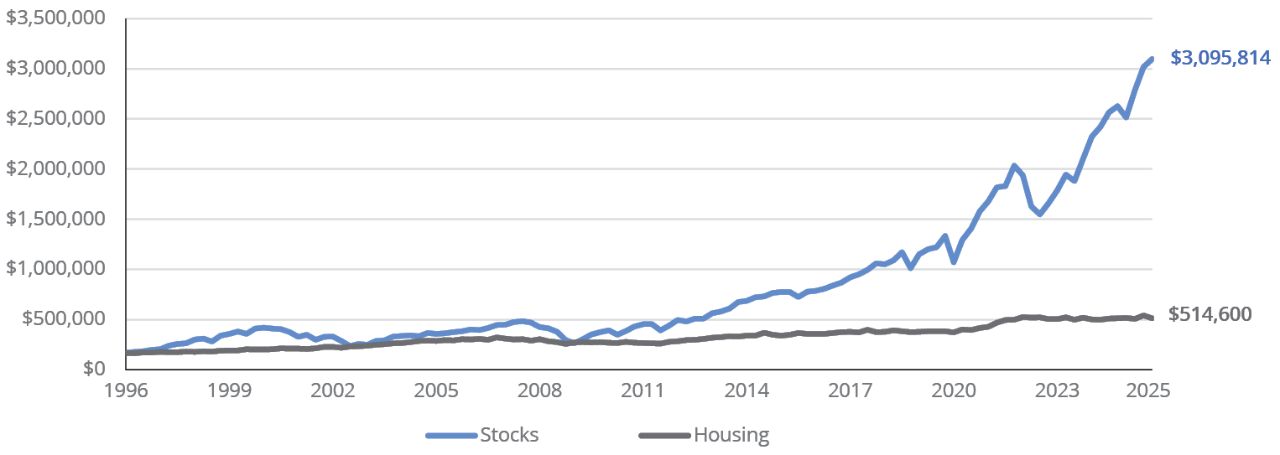





You’re standing at the crossroad of an important investment decision, torn between the allure of the stock market and the tangible promise of a real-estate investment property. But which investment is better for you?
Owning property is often viewed as a major tenet of the American dream: a sign of financial success. A recent Gallup poll shows more Americans view real estate as the best long-term investment vs. stocks or mutual funds by a 38%-to-20% margin.1 But real estate is sometimes viewed as more of a younger person’s game. Gen Z and Millennials (ages 21-43) tend to view real estate as the ultimate investment, while their older counterparts (ages 44+) gravitate toward stocks as the smartest path to wealth.2
Both stocks and real estate have advantages and drawbacks. Let’s take a look.
Potential Advantages of Real Estate
Real-estate properties have historically increased in value over time. For example, consider the growth from 1970 to now; then, the average price of a US house was $27,000. By early 2026, a comparable investment property would be worth approximately $500,000, though values vary widely by location and property type.3 For a long-term owner, that appreciation could represent a meaningful source of retirement funding if the property were eventually sold.
Owning real estate also allows qualified buyers to use leverage: a down payment can be paired with mortgage financing for the remainder of the purchase price. Qualified homeowners can deduct mortgage interest on up to $750,000 in mortgage debt. Additionally, real estate is a physical asset with intrinsic value, ensuring it will retain some value even during severe financial downturns.
Potential Disadvantages of Real Estate
While it’s possible to buy an investment property with as little as 5% down, it can be much more difficult for potential buyers to come up with the 20% down payment necessary to avoid private mortgage insurance, which significantly increases the monthly payment amount.
Additionally, it may be difficult for many 25-year-olds to spare the time and attention needed to maintain an investment property while they’re just beginning their careers—not to mention the significant expenses associated with hiring property managers and paying for property taxes, insurance premiums, repairs, renovations, and labor. These ongoing costs could very well rise over time.
Real-estate investors also must consider the time and resources needed for evaluating new properties, tenant screening, addressing tenants’ questions and concerns, and maintaining a property. Finally, there’s the issue of limited liquidity; it may take months to sell a house or other investment property, particularly in a slack housing market.