




Client Loyalty Isn’t a Given

3 out of 4
75% of clients considered switching or switched financial professionals
Source: Advisor-Client Communication Survey, YCharts, 2024
You’re all packed up for vacation, pulling out of the driveway, when suddenly it hits you: that nagging feeling that you’ve forgotten something crucial.
You mentally run through your checklist: wallet, check; underwear, check; toothpaste, check. Despite ticking off each item, you’re still plagued by the worry that something vital slipped your mind.
Likewise, before client meetings, anxiety can sneak in. You’re busy gathering their investment performance, portfolio analysis, financial plan, and more. Yet, you still fret about the small talk that kicks off the meeting, unsure whether you have all the details needed to engage in a personal conversation.
Here’s how to sidestep that unease and ensure you have all the necessary information at your fingertips.
First, the Importance of Emotional Connection
Many financial professionals tend to keep client conversations focused on finances.
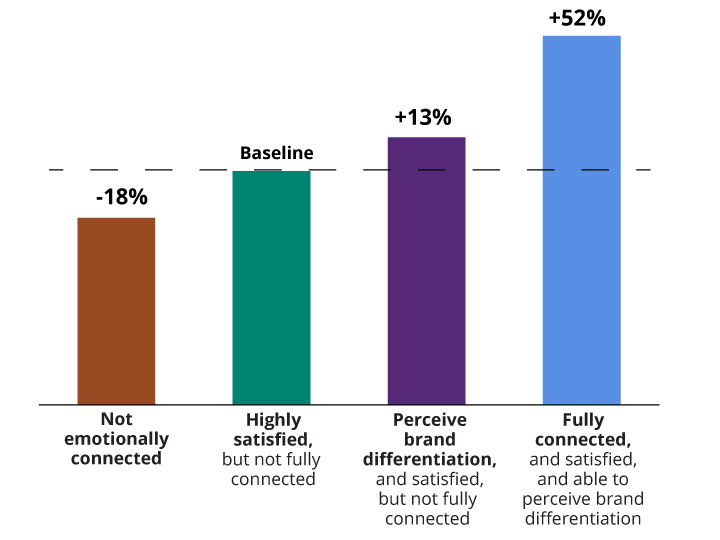
That’s what clients expect. But by doing so, the relationship stays strictly business, without an emotional connection. This is a problem because clients who are emotionally connected are more valuable to your practice (see graph below).
Here’s why. Emotionally connected customers buy more of your products and services, visit you more often, exhibit less price sensitivity, pay more attention to your communications, follow your advice, and recommend you more—everything you hope their experience with you will cause them to do.
So how do you build emotional connections with clients? You show your clients that you care about more than their finances by having conversations about personal topics. Here’s how to get the information you need to connect emotionally with clients.
Second, Gather Information About Your Clients’ Key Relationships
If you’re going to have personal conversations with clients, a good place to start is to discuss their family and friends. And rather than say “How are the grandkids?” ask, “How are Olivia and James?” Knowing the names of family members shows you care and is much more personable.