Pre-Sales Support
Mutual Funds and ETFs - 800-456-7526
Monday-Thursday: 8:00 a.m. – 6:00 p.m. ET
Friday: 8:00 a.m. – 5:00 p.m. ET
Post-Sales and Website Support
888-843-7824
Monday-Friday: 9:00 a.m. - 6:00 p.m. ET
| 1 | Start with money habits, not account numbers – Partners often approach saving, spending, and financial security differently. Talking about financial habits in advance can make future decisions feel less personal and more productive, potentially spotting friction before it turns into conflict. |
| 2 | Update more than your bank accounts – Combining finances is a good time to review beneficiaries, insurance policies, account titles, estate documents, and other legal or financial paperwork. These updates may not feel urgent, but they can make a big difference if life changes unexpectedly. |
| 3 | Expect a paperwork pileup – Updating addresses, tax withholding, direct deposits, and account access can all take time to sort out. Setting aside time early can help avoid delays, confusion, and last-minute stress. Small administrative updates now can prevent bigger headaches later. |
| 4 | There’s more than one right way to manage money together – Fully joint, fully separate, or hybrid systems can all work depending on your goals, income, and preferences (FIGURE 1). The best structure is the one both partners understand, agree to, and can maintain over time. |
| 5 | Transparency matters more than where every dollar sits – Confusion is more likely when income, assets, debt, and obligations are unclear. Regardless of how accounts are structured, both partners should know what money is coming in, what’s going out, and what financial commitments already exist. |
| 6 | Your relationship includes your person—and their debt – Student loans, credit cards, car loans, and other liabilities can affect household cash flow, credit, and flexibility. Talking about debt early can help couples make fair decisions and avoid surprises later. It can also help them decide which goals may need to come first, such as paying down high-interest debt before taking on a major purchase. |
| 7 | Let shared goals guide everyday choices – Priorities such as buying a home, raising children, building an emergency fund, or saving for retirement should help shape how money is managed. When couples know what they’re working toward, tradeoffs can feel easier to discuss. Ranking goals together can also help both partners understand what matters most when money decisions compete. |
| 8 | “Mine” and “ours” can both have a place – Shared accounts can make couples feel more like a team, but they can also raise questions about spending, independence, and accountability. For some couples, keeping room for personal spending can help preserve flexibility while still supporting shared goals. Clear expectations, such as setting a certain threshold for larger purchases that warrant discussion, can help keep the system supportive instead of stressful. |
| 9 | Make it a long-term planning habit – Decisions made today can affect future goals such as retirement timing, lifestyle, income needs, and family planning. A new job, home purchase, child, inheritance, or caregiving responsibility can all be reasons to revisit the plan. As circumstances change, your financial system may need to change, too. |
| 10 | Keep the conversation on the calendar – Regular money conversations can help both partners understand what’s working, what needs attention, and where adjustments may be needed. The goal isn’t to make every conversation perfect, it’s to keep money from becoming a mystery. Over time, check-ins can help couples celebrate progress, adjust when life changes, and make financial decisions feel more like a shared plan. |
FIGURE 1
There’s More Than One Way to Combine Finances
Financial Systems for Americans Who Are Married, in a Civil Partnership, or Living With a Partner
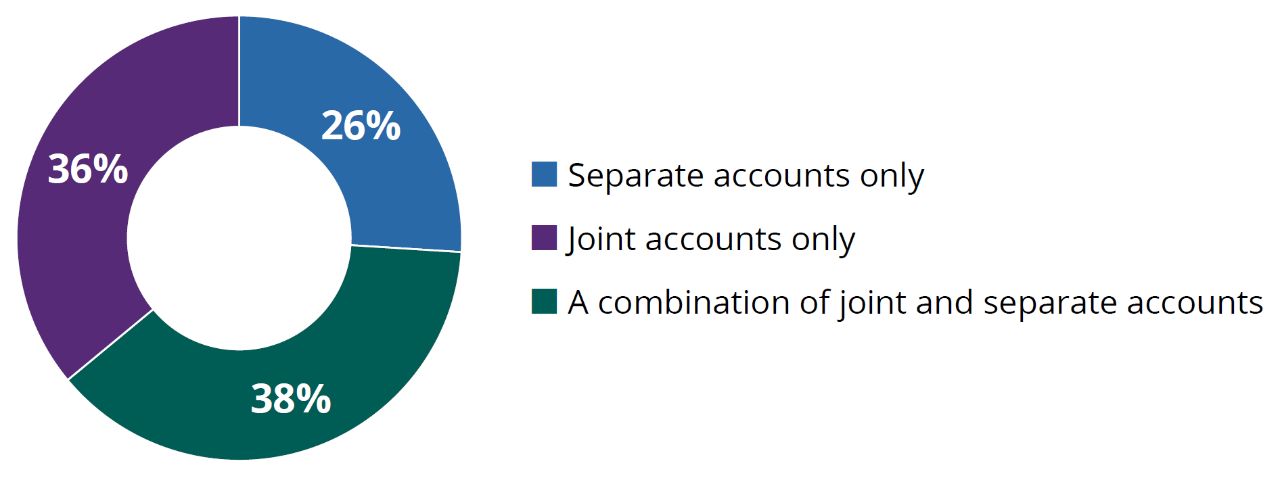
As of 12/25. Source: Bankrate. Survey: “Most Couples Keep At Least Some Of Their Money Separate.”
To learn more about managing finances during life changes, talk to your financial professional.
Important Risks: Investing involves risk, including the possible loss of principal.
The views expressed here should not be construed as investment advice. They are based on available information and are subject to change without notice. The information above is intended as general information and is not intended to provide, nor may it be construed as providing, tax, accounting, or legal advice. As with all matters of a tax or legal nature, please consult with your tax or legal counsel for advice.