




The perfect retirement story we tell ourselves goes like this: We grow a sizable nest egg, we quit our jobs, and we head off into our golden years confident that our money will last as long as we do.
But the risk we may not see coming is a down market early in retirement that can permanently damage future portfolio income, even if the markets stage a recovery in later years. This risk is called “sequence-of-returns” risk.
Bull vs. Bear: Different Retirement Results
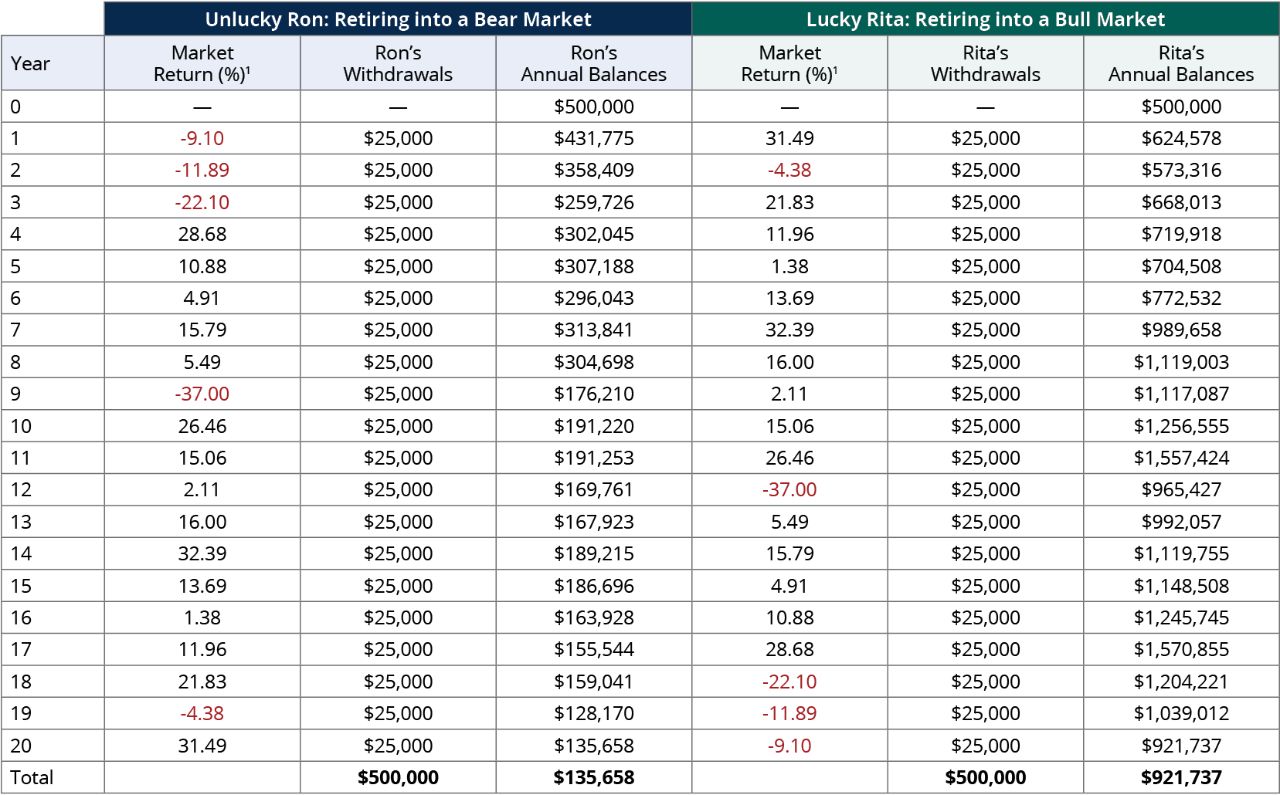
Imagine two retirees, Rita and Ron, who start retirement in remarkably similar financial situations: a nest egg of $500,000, 5% withdrawals each year for income, and an identical 7.68% average return over 20 years. Their experiences differ in when they face a bear market.
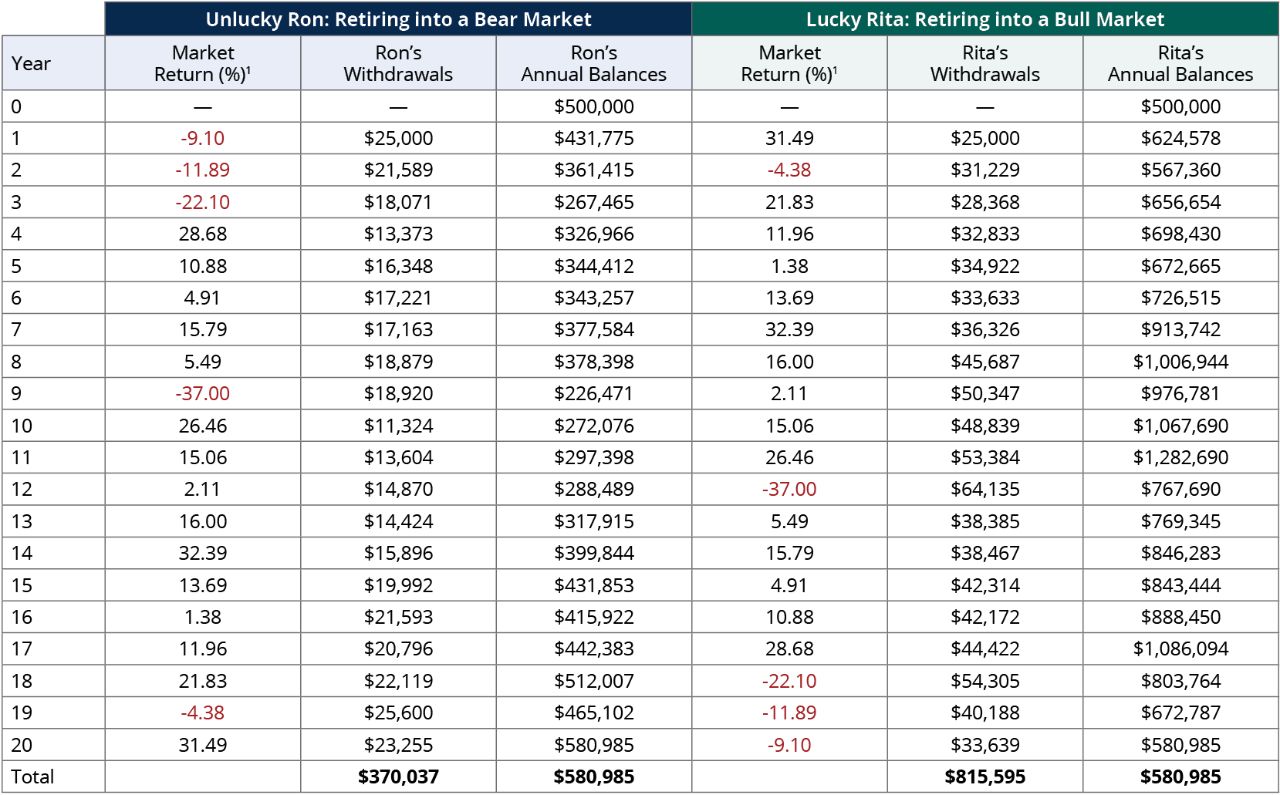
To make our scenario more realistic, we used the S&P 500 Index’s actual returns from 2000-2019 for Ron and reversed those same returns for Rita (FIGURE 1). While some withdrawal strategies include adjustments to inflation, we have omitted those changes for the sake of simplicity.
Unlucky Ron
Ron’s stock portfolio experiences successive annual losses early on. He’s forced to sell some of his holdings at a loss to maintain his $25,000 annual income target. Once sold, those stocks are unable to participate in the market turnaround that occurs later.
By maintaining that steady $25,000 withdrawal rate, Ron sees his initial $500,000 balance dwindle to $135,658 in year 20, despite the market having bounced back strongly after the initial bear market.
Lucky Rita
In our hypothetical example, Rita experiences the same annual market returns as Ron, except in reverse. Her portfolio begins with strong gains, so, when a bear market finally strikes later on, that decade plus of healthy overall returns allow Rita to keep withdrawing the same $25,000 each year with little fear of running out of money. In year 20, Rita’s account retains a balance of $921,737 (vs. Ron’s balance of $135,658).